When You Buy My Books
E.C. McMullen Jr.
RUMOR

A city in panic as people vanish.
One scientist may have the answer, but is he telling the truth? Or is he hiding behind RUMOR?
PERPETUAL
BULLET
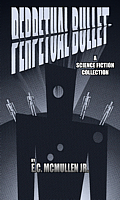
"'Some People' ... may be the standout story in the book."
- John Grant, Infinityplus
E.C. McMullen Jr.
WILLOW BLUE
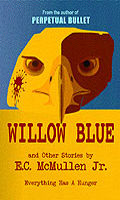
"'Willow Blue' will burrow under your skin and stay there long after you've put the book down."
- Jeffrey Reddick, Creator of
FINAL DESTINATION
IN OTHER BOOKS
E.C. McMullen Jr.'s
short story
CEDO LOOKED LIKE PEOPLE
in the anthology
FEAR THE REAPER
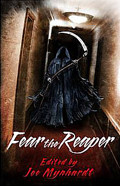
"This Ray Bradbury-esque is one of the most memorable and one of the more original stories I've read in a long time."
- Steve Isaak,
Goodreads
HORROR 201:
The Silver Scream
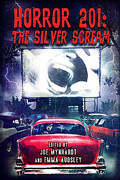
Filmmaker's Guidebook
featuring
RAY BRADBURY,
JOHN CARPENTER,
WES CRAVEN,
TOM HOLLAND,
E.C. McMULLEN Jr.,
GEORGE A. ROMERO,
and many more.
Extensively quoted in
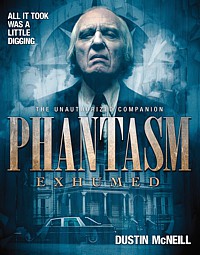
PHANTASM
EXHUMED
The Unauthorized Companion
Robert S. Rhine's
SATAN'S 3-RING
CIRCUS OF HELL
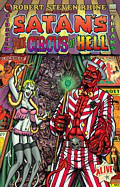
Forward by
GAHAN WILSON &
FEO AMANTE.
Featuring comics by
ALEX PARDEE,
WILLIAM STOUT,
STEVE BISSETTE,
FRANK DIETZ,
JIM SMITH,
FRANK FORTE,
ERIC PIGORS,
MIKE SOSNOWSKI,
OMAHA PEREZ,
DAVID HARTMAN,
STEVEN MANNION,
JACOB HAIR,
and more!
And In
CINEMA
E.C. McMullen Jr.
Head Production Designer
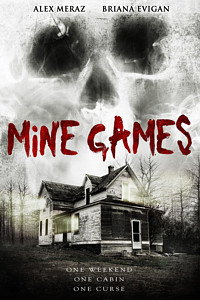
MINE GAMES
(Starring:
JOSEPH CROSS,
BRIANA EVIGAN,
ALEX MERAZ,
ETHAN PECK)
Dept. head
Special Effects Make-Up
(SFX MUA)
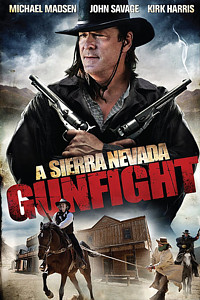
A SIERRA NEVADA
GUNFIGHT
(MICHAEL MADSEN & JOHN SAVAGE).
Production Designer

UNIVERSAL DEAD
(DOUG JONES,
D.B. SWEENEY,
GARY GRAHAM)
Art Director
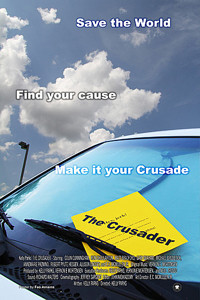
THE CRUSADER
(COLIN CUNNINGHAM,
GARY GRAHAM)
 |
 |
Review by E.C. McMullen Jr. |
||
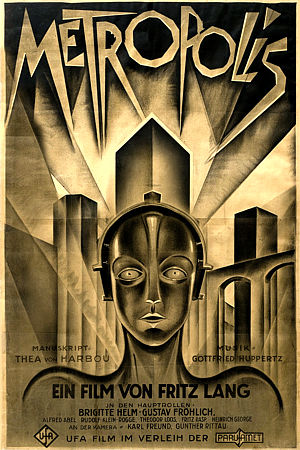
Germany Release: Jan. 10, 1927 USA Release: March 13, 1927 Universum Film (UFA) Rated: N/A |
||||
Are there any movies that truly deserve to be remade?
I say yes and my vote goes for this movie, METROPOLIS. This, however is not a review of a classic piece of cinema, but a call for a new adaptation of the original work. METROPOLIS is Ripe 4 Remake.
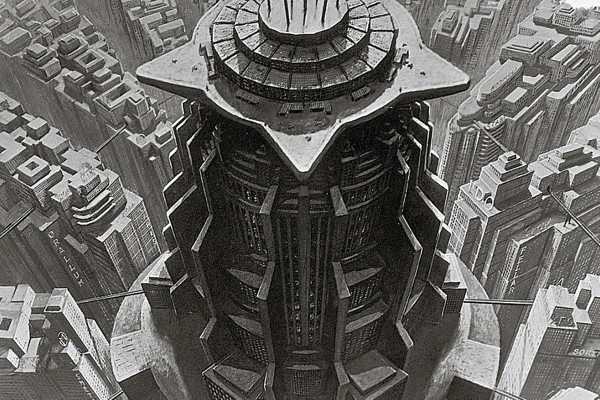
METROPOLIS. As difficult as it was to make, and as dedicated to the task as director Fritz Lang was to make the movie a respectful adaptation of the novel (his wife, Thea von Harbou wrote it), the technology just wasn't there.
In the novel, Freder lives, communicates, and strategizes while playing the keyboard on his great pipe organ. We know his music brings out his overpowering emotions. We know the effect music has on him. He becomes hallucinatory when listening to music. His visions control his actions. Yet Freder has grown up so insulated by his over-protective father, that he knows nothing of the real world. His joys and sorrows are childish, selfish, and formless, until the calm and fragile presence of the impoverished Maria simply enters it, smashing his world view forever.
Maria, with an ethereally accepting, forgiving and open heart, does not understand that her simple actions are so radical, bold and brave. Instead of being imprisoned or worse, Maria is swept back to her place by those who obey the masters of METROPOLIS. Her protection is simply her naturally genuine nature. There is nothing disingenuous about her.
When we first see Maria, she is surrounded by unkempt, hungry children who, for the first time, witness the overwhelming gaudy opulence of those who enslave them and condemn them to the depths of Metropolis. Upon first seeing such ostentatious glamor, the children shrink back frightened. At that moment Maria could have said any condemning thing and she would have been right for doing so. But what she said was,
"Look children. These are your brothers and sisters."
Like the origin legend of the first Buddha, Siddhārtha Gautama, Freder never imagined such poverty existed. As he stood there exposed, awash in his first moment of shame, he heard this astounding person tell these thin, ragged waifs, "Look children. These are your brothers and sisters."
How could his father, the Master of Metropolis not know of this?
His father, the cruelly cold and indifferent Joh Freder has only one weakness and that is his love for his son.
Joh experienced his own first moment of shame the day when his beloved wife, Hel, died right after childbirth. He collapsed on the hospital floor, by his wife's bedside, screaming in agony like a wild animal having its legs crushed. The most powerful man in Metropolis could not save the woman he loved.
But while he treasures the precious final gift his wife gave him, he knows his charming yet fevered son can never be a city master. Behind Joh's mask of stern authority, he grows ever frightened of his age and of the other city masters who would add Metropolis to their collection.
The only man in Metropolis who knows Joh Freder's weakness is the only man who also stands to lose as much as Joh, should the Master lose his city. That is the brilliant scientist Rotwang.
Joh funded the creation of Metropolis, but only Rotwang had the genius to both create it and engineer it. Yet its a partnership of bitter enemies because they both strove to win the heart of Hel.
Hel loved and cherished Rotwang, and loved and respected Joh. In the end she made her choice, knowing that, whoever she chose, she would destroy their brotherly friendship. For the rest of her brief life Hel would look behind her and wonder why her footprints weren't soaked in the blood of Rotwang.
As Hel knew he would, Rotwang became a mad creature for a while, and set out to destroy his creation. Both men were the same in that regard, but only Joh had the financial resources to make it happen.
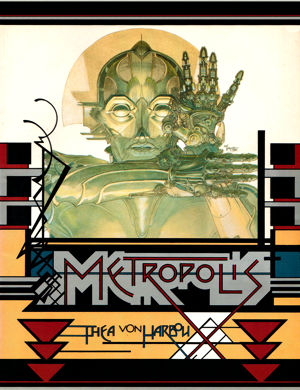
My first exposure to Thea von Harbou's inspiring novel, METROPOLIS, was the edition brilliantly illustrated by Michael W. Kaluta in 1988.
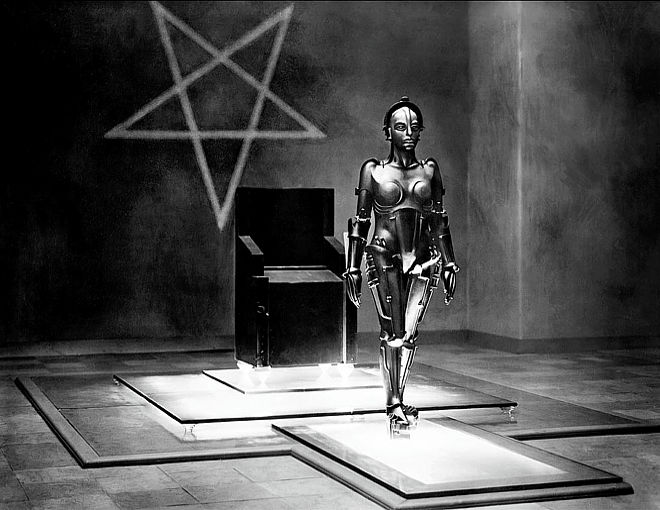
Having read the book, all of these things were visually touched upon so briefly for the movie, that the audience has no idea of the emotional depth of story that is being played out. Two powerful men so consumed by loss and their feelings of inadequacy that they both become evil without knowing it. Neither money or intelligence can save them from their human flaws. They are both at the mercy of their own cruelty when they think they see their weaknesses in others.
Worse for Joh is that he sees such weakness in his own and only beloved son, and knows beyond doubt that its his own fault.
That's just the backdrop story, but without it, all of Freder and Maria's actions, their burgeoning love and respectful partnership with each other, and their ability to achieve the seemingly impossible against such massive odds, are a trite veneer.
In a time when silent pictures were under an hour, Lang made a 153 minute movie in a valiant yet failed attempt to bring the concept to life. In a time of silent pictures, conversation was condensed to single sentence soundbite blurbs that could fit on a card, and story took a backseat to spectacle.
That is why I think Metropolis deserves a remake.

This article
copyright 2015 E.C.McMullen Jr.

|
| DRESS NICE | |


| YOU MIGHT ALSO ENJOY (Sub-Section: MALEVOLENT MACHINES) |
||
 |
|
 |
| METROPOLIS BOOK REVIEW |
METROPOLIS MOVIE REVIEW |
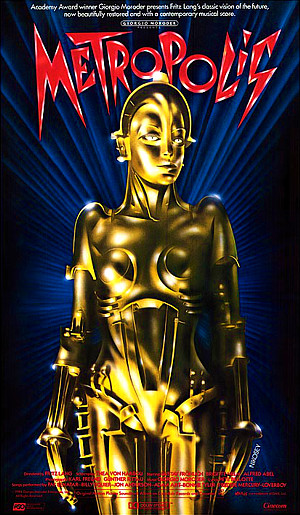
METROPOLIS: Goergio Moroder Edit MOVIE REVIEW |
| FEO AMANTE'S HORROR THRILLER Created by: E.C.MULLEN JR. |
| COME FOLLOW ME @ Amazon |
| ECMJr |
| Feo Blog |
| IMDb |
| Stage32 |
| YouTube |
| Zazzle Shop |